



Alternatives to Polyester for Wrinkle-Free Clothing
Table of Contents
- Why Look Beyond Polyester for Wrinkle-Free Clothing?
- Wrinkle-Resistant Natural Fabrics That Actually Perform
- Best Fabrics for Travel That Don't Wrinkle
- Lyocell vs Polyester: Which Is Better for Crease Resistance?
- How to Care for Linen Clothes to Keep Them Looking Crisp
- Choosing Wrinkle-Free Clothing That Fits Your Values
- Conclusion
- Frequently Asked Questions
Last Updated: October 21, 2026
Why Look Beyond Polyester for Wrinkle-Free Clothing?
Polyester dominates the wrinkle-free clothing market because it holds a crease, dries fast and costs very little to produce. That convenience hides a real cost: it is petroleum-based, sheds microplastics in the wash, and rarely breaks down. For anyone trying to dress well while buying responsibly, the question is whether natural and semi-natural fibres can match that performance.
At HotSquash, we design and make dresses in London, and crease resistance is one of the first things we test in a fabric. Our answer is that some alternatives come close, a few genuinely rival polyester, and none are identical. Below, we compare the realistic options by crease performance, care needs and environmental footprint, so you can choose with your eyes open.
Wrinkle-Resistant Natural Fabrics That Actually Perform
Wool, linen blends and Tencel are the strongest natural contenders for wrinkle-resistant natural fabrics, each trading some easy-care convenience for breathability and a lighter environmental footprint. Pure cotton and pure linen crease readily. Blending them with a small amount of elastane or a smoother fibre improves recovery without losing the natural handle.
Here is how the main options compare on the things that matter day to day:
| Fabric | Crease Resistance | Breathability | Care Effort | Best For |
|---|---|---|---|---|
| Merino wool | High | High | Low, hangs out creases | Travel, office |
| Linen blend | Medium | Very high | Medium, needs steam | Warm weather |
| Tencel/lyocell | Medium-high | High | Low-medium | Draped dresses |
| Pure cotton | Low | High | High, needs ironing | Casual wear |
| Pure linen | Low | Very high | High | Relaxed summer |
The insider point most guides miss: it is the weave, not just the fibre, that decides creasing. A tighter weave resists folds better than a loose one, which is why a good pair of wool trousers outlasts a cotton one on a long day.
Best Fabrics for Travel That Don't Wrinkle
Merino wool and Tencel lead the field for the best fabrics for travel that don't wrinkle, because both recover from being packed and resist odour between washes. For a multi-day trip, they let you pack lighter and rewear pieces with confidence.
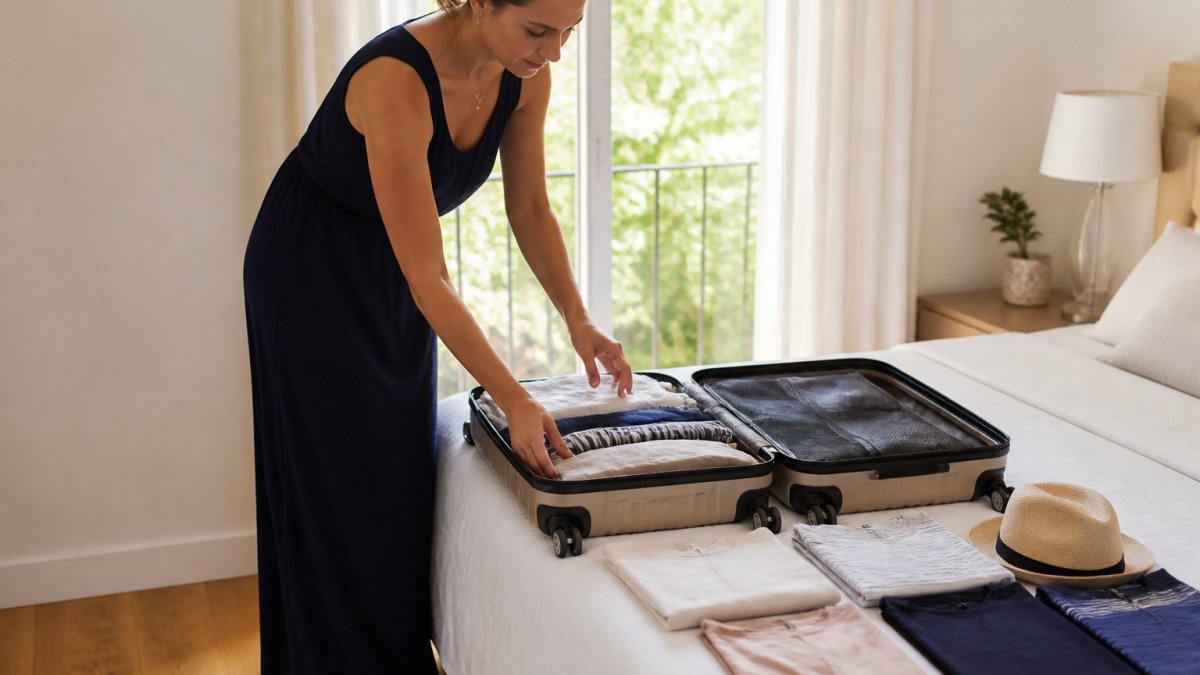
A practical packing routine helps more than any single fabric:
- Roll rather than fold to reduce sharp creases
- Place heavier items at the bottom of the case
- Unpack and hang immediately on arrival
- Choose darker prints, which hide creases better than pale solids
Our crease-resistant Empire Waist Maxi Dress is built for exactly this: lightweight, easy to pack and designed to travel well. If you are between sizes, size up, as the style is fitted under the bust.

Lyocell vs Polyester: Which Is Better for Crease Resistance?
Polyester wins on pure crease resistance: it is engineered to hold its shape and needs almost no ironing. Lyocell, a semi-synthetic made from wood pulp, creases a little more but breathes far better and is biodegradable. The right choice depends on what you value more.
In practice, lyocell feels cooler and drapes more softly, which suits dresses and occasion wear. Polyester holds a sharp line and dries quickly, which suits structured pieces and frequent washing. Neither is "better" in the abstract. For a wedding or a long working day in warm rooms, lyocell's comfort usually outweighs the small extra care. For a hard-wearing, low-maintenance wardrobe, polyester still earns its place.
How to Care for Linen Clothes to Keep Them Looking Crisp
Knowing how to care for linen clothes is mostly about moisture and heat. Linen creases because the fibres have little natural elasticity, so the trick is to work with damp fabric and gentle heat rather than fighting it.
A simple routine keeps linen looking sharp:
- Wash on a cool, gentle cycle and avoid overloading the machine
- Remove while still slightly damp
- Iron on a medium-hot setting while damp, or steam rather than press
- Hang immediately and store folded, not on a thin hanger
Linen blends crease less than pure linen and are easier to live with. If crispness matters for work, a linen blend is the sensible middle ground between breathability and a tidy finish.
Choosing Wrinkle-Free Clothing That Fits Your Values
Crease resistance and sustainability are not opposites, but the trade-offs are real. A fabric that never creases tends to rely on synthetic fibres or chemical finishes; a natural one asks a little more of your care routine. The honest approach is to match the fabric to the garment's job.
For pieces you wear often and wash hard, a crease-resistant blend makes sense. For occasion wear and pieces you want to keep for years, a natural or semi-natural fibre rewards the extra attention. Buying fewer, better-made pieces and caring for them properly does more for your footprint than any single fibre choice.
This is where British-made matters. At HotSquash, our dresses are designed and produced in London using premium fabrics, including recycled polyester, with a focus on a lower carbon footprint. That keeps the supply chain short and the quality controllable. You can browse the full range and see the fabrics for yourself.
Conclusion
Building a wardrobe that looks sharp without constant ironing is a balancing act, and no single fabric solves it perfectly. The answer is to choose each piece by its job: natural and semi-natural fibres for comfort and longevity, crease-resistant blends where convenience matters most.
HotSquash makes that easier with London-designed dresses in crease-resistant, easy-care fabrics, backed by free UK delivery and free UK returns so you can try the fit at home. Explore the collection and start shopping for pieces that work as hard as you do.
Frequently Asked Questions
What fabrics are wrinkle-resistant but not polyester?
Several natural and semi-synthetic fabrics resist creasing well without relying on polyester. Wool, especially merino, has a natural elasticity that helps it recover from folding. Lyocell, made from wood pulp, drapes smoothly and resists wrinkles when blended with a small amount of elastane. Linen creases easily on its own but performs better in a blend. Cotton can be treated or blended to reduce creasing. For truly low-maintenance wrinkle-free clothing, look for fabrics that combine natural fibres with a small percentage of stretch for recovery.
Which natural fabric wrinkles the least?
Wool wrinkles the least among natural fabrics. Its coiled fibre structure gives it natural elasticity, so creases from sitting or packing tend to hang out overnight. Merino wool is particularly good for travel because it is lightweight, breathable and odour-resistant. Linen is at the other end of the scale and creases readily, though many people embrace that texture. Silk creases more than wool but less than cotton. If you want a natural fabric that stays smooth with minimal effort, wool is the strongest choice.
Does lyocell wrinkle easily?
Lyocell wrinkles less than cotton or linen but more than polyester. Its smooth fibre surface helps it resist creasing during wear, and it drapes well, which disguises minor folds. Pure lyocell can still crease after long periods of sitting or if packed tightly. Blending lyocell with a small amount of elastane or polyester improves recovery. In the lyocell vs polyester comparison, lyocell wins on breathability and sustainability, while polyester wins on wrinkle recovery. A blend often gives the best of both.
How can I stop natural-fibre clothes from creasing?
Start by choosing fabrics with natural recovery, such as wool or lyocell blends. Wash on a low spin cycle and reshape garments while damp, then hang them to dry rather than tumble drying. Pack by rolling rather than folding to reduce sharp creases. In hotels, hang creased items in the bathroom while you shower; the steam relaxes fibres. For linen, iron while slightly damp on a medium setting. A light spray of water and a few minutes on a hanger can refresh most natural fabrics without full ironing.