



How to Maintain Crease Resistant Workwear: 2026 Guide
Table of Contents
- Why Crease Resistant Workwear Needs the Right Care Routine
- How to Wash Wrinkle-Resistant Clothes Without Damaging the Finish
- How to Remove Creases from Clothes Without Ironing
- How to Stop Trousers Creasing at Work
- How to Iron Crease-Resistant Clothing (When You Actually Need To)
- Drying and Storing Crease Resistant Workwear
- Conclusion
- Frequently Asked Questions
Last Updated: October 12, 2026
Why Crease Resistant Workwear Needs the Right Care Routine
Crease resistant workwear is clothing made from fabrics that resist wrinkling during wear, so it stays smart through commutes, long meetings and travel days. The finish that makes this possible is delicate. Wash it badly and the fabric loses the very quality you paid for.
That is the part most care labels never explain. Crease-resistant dresses, such as those made by HotSquash in London from recycled polyester blends, require specific care. Treating these pieces like ordinary cotton is a common mistake.
Below, we explain exactly how to wash, dry, iron and store crease resistant workwear so it keeps its smooth finish for years, not months. The routine takes minutes. The payoff is a wardrobe that always looks pressed.
How to Wash Wrinkle-Resistant Clothes Without Damaging the Finish
Washing is where most people ruin the finish. Hot water, harsh detergent and a crowded drum all break down the fibres that keep wrinkles away. Get these three things right and the fabric will hold up.
Machine Washing Temperature and Detergent
Wash at 40°C or lower, on a gentle cycle. Use a mild liquid detergent rather than powder. Powder can leave residue that stiffens the fabric and makes creases more likely.
Check the label first. Our own pieces, like the Empire Line Maxi Dress, are machine washable at 40°C. That is the ceiling, not the target. A cool 30°C wash is gentler and still cleans well.

A few habits that protect the finish:
- Turn garments inside out before washing
- Wash similar colours together
- Use a mesh laundry bag for dresses with zips or ties
- Skip fabric softener entirely
- Leave a little space in the drum
What to Avoid in the Wash
Three things cause the most damage: heat, bleach and overloading.
Heat is the worst offender. It weakens the stretch in elastane blends and can set wrinkles in permanently. Bleach breaks down fibres and dulls colour. Overloading rubs garments together, which creates the creases you are trying to avoid.
Also avoid:
- Hot washes above 40°C
- Tumble drying on high heat
- Wringing or twisting wet fabric
- Leaving wet clothes in the machine for hours
The UK Care Guide from the Waste and Resources Action Programme recommends checking the care label before every wash.
How to Remove Creases from Clothes Without Ironing
Steam is your best tool here. Hang the garment in a steamy bathroom after a hot shower, or use a handheld steamer on a low setting. The gentle moisture relaxes fibres without the heat that damages the finish.
For stubborn creases, try these methods in order:
- Hang the garment on a padded hanger and smooth it with your hands
- Spritz lightly with water and let it hang for 15 minutes
- Use a handheld steamer, holding it 15cm from the fabric
- Shake the garment gently and hang it to dry fully
A common mistake is reaching for the iron straight away. For crease resistant workwear, that is usually unnecessary and often does more harm than good.
How to Stop Trousers Creasing at Work
The creases that appear during the day come from sitting, friction and trapped heat. You cannot avoid sitting at a desk, but you can reduce the damage.
Start with fit. Trousers that are too tight pull across the thigh and knee, which sets creases fast. A relaxed fit gives the fabric room to move without folding.
Empire Line Maxi Dress →
Then think about your day:
- Stand and walk every hour to let the fabric recover
- Avoid sitting on hard or rough surfaces
- Hang trousers on a clip hanger during your lunch break
- Choose a fabric blend with elastane for natural recovery
For dresses and jumpsuits, the same logic applies. Our Richmond Ponte Dress is designed to shape the body and resist creasing, which makes it a practical choice for a long office day and a cold commute.

How to Iron Crease-Resistant Clothing (When You Actually Need To)
Iron only when steaming has failed. When you do, use the lowest heat setting and press lightly. A hot iron will flatten the finish and leave a shine on dark fabric.
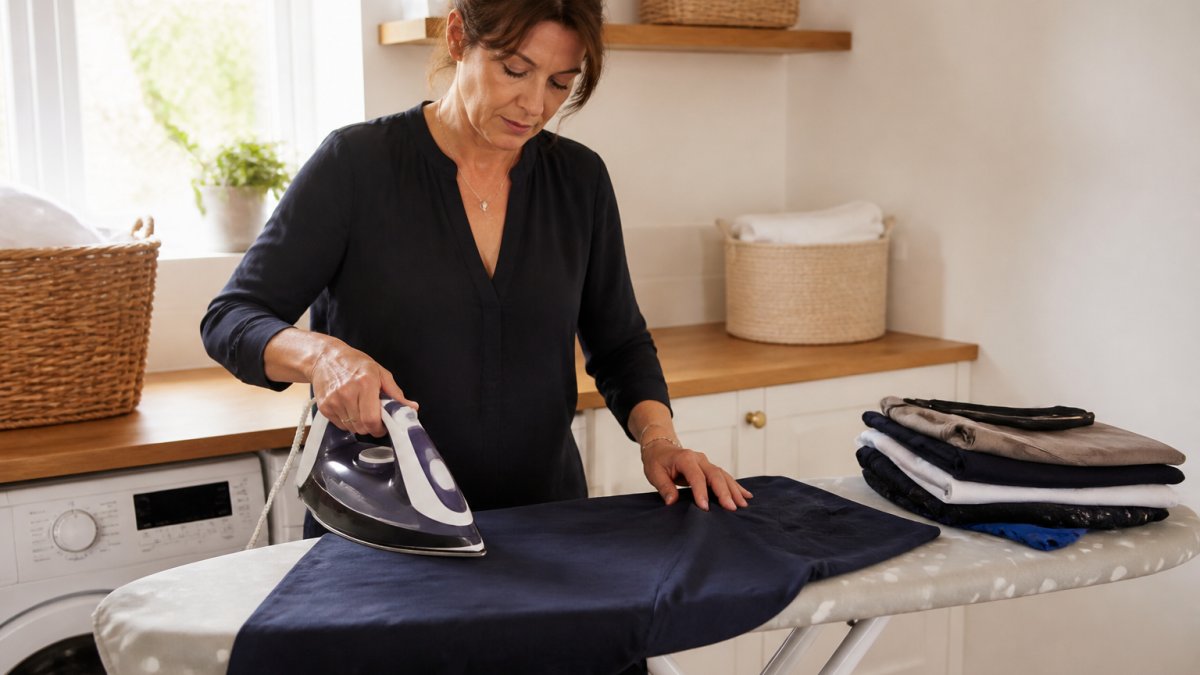
Follow these steps:
- Check the label. Ours say iron on low, if necessary.
- Turn the garment inside out.
- Place a thin cotton cloth between the iron and the fabric.
- Use short, gentle presses, not long strokes.
- Let the garment cool on a hanger before wearing.
Never iron directly over zips, buttons or embellishments. The metal heats fast and can scorch the fabric around it.
Drying and Storing Crease Resistant Workwear
Drying is simple: air-dry whenever you can. These fabrics dry quickly, so a tumble dryer is rarely needed. If you must use one, choose the lowest heat setting and remove the garment while it is still slightly damp.
Hang dresses and jumpsuits on padded hangers straight from the wash. Gravity does most of the smoothing for you. Our Long Sleeve Maxi Dress with Neck Tie dries fast and needs no tumble drying, which is one reason it travels well.

For storage:
- Hang rather than fold where space allows
- Use padded hangers to avoid shoulder marks
- Leave a little breathing room in the wardrobe
- Fold knitwear and ponte fabrics flat to avoid stretching
Conclusion
Keeping crease resistant workwear looking sharp comes down to three habits: wash cool, dry flat or hung, and iron only when you truly must. Get those right and the finish lasts for years.
If you would rather not think about it at all, that is exactly what we design for. Every HotSquash piece is made in London from premium fabrics with a low carbon footprint, built to be low maintenance and effortless to wear. You get free UK delivery and free UK returns, so trying your size carries no risk.
Start shopping with HotSquash and build a wardrobe that stays polished from the first meeting to the last.
Frequently Asked Questions
How should you wash crease-resistant workwear?
Machine wash at 40°C on a gentle cycle using a mild detergent. HotSquash pieces like the Richmond Ponte Dress and Empire Line Maxi Dress are all machine washable at 40°C. Turn garments inside out, wash similar colours together, and avoid fabric softener, which coats the fibres and reduces the fabric's ability to resist creasing. Skip the tumble dryer; these fabrics dry quickly on a hanger.
Can you tumble-dry crease-resistant clothes?
It is best to avoid it. HotSquash crease-resistant garments are designed to dry quickly on a hanger, so a tumble dryer is not needed. The heat and tumbling action can break down the finish that keeps the fabric smooth. Hang the garment on a padded hanger straight from the wash and let it dry naturally.
Should you iron crease-resistant clothing?
Usually no. The whole point of crease-resistant workwear is that it comes out of the wash ready to wear. If a stubborn fold remains, iron on a low heat setting, as recommended on HotSquash care labels such as those on the Long Sleeve Maxi Dress with Neck Tie. Use a pressing cloth and keep the iron moving to protect the fabric finish.
How do you remove creases from workwear without ironing?
Hang the garment in a steamy bathroom for 10 to 15 minutes while you shower. The steam relaxes fibres and lets creases fall out. For a quicker fix, spritz the creased area lightly with water, smooth it with your hand, and hang it up to dry. A handheld garment steamer also works well and is gentler on crease-resistant finishes than direct iron contact.