



Is Premium Sustainable Fashion Worth It? A 2026 Comparison
Table of Contents
- Is Premium Sustainable Fashion Worth It? The Honest Answer
- Sustainable Fashion vs Fast Fashion: What the Price Tag Really Reflects
- Cost Per Wear Clothing: The Calculation That Changes the Verdict
- How to Identify Ethical Clothing Brands Without Taking Their Word for It
- Affordable Sustainable Fashion: What Premium Actually Costs in Practice
- Where Premium Sustainable Pieces Earn Their Price: Workwear and Occasion Wear
- The Drawbacks of Premium Sustainable Fashion (and When Fast Fashion Wins)
- Verdict: Who Should Buy Premium Sustainable Fashion
- Frequently Asked Questions
Last Updated: October 9, 2026
Is Premium Sustainable Fashion Worth It? The Honest Answer
Premium sustainable fashion is worth it when the cost per wear falls below what you would pay for a fast fashion piece you replace three times over. At HotSquash, we design and produce luxury womenswear in London, and we have watched this question divide wardrobes for years. The honest answer depends on three things: how often you wear the piece, how well it survives repeated washing, and whether the maker can prove where and how it was made. Below, we break down the real maths, the verification checklist, and the situations where premium genuinely loses.
The industry rarely helps. Fast fashion retailers sell volume, so their marketing pushes newness. Premium makers sell longevity, so their marketing pushes craft. Neither tells you how to run the numbers yourself. That gap is where most buying decisions go wrong, because a £9.99 pair of trousers worn twice costs more per wear than a £60 pair worn forty times.
This guide from HotSquash walks through the calculation, the labels worth trusting, and the categories where spending more actually pays you back.
Sustainable Fashion vs Fast Fashion: What the Price Tag Really Reflects
Sustainable fashion is clothing designed, produced and sold in a way that reduces environmental harm and treats workers fairly, while fast fashion is volume-driven production that prioritises speed and low prices over both. The price difference between them is not just margin.
A fast fashion price covers fabric, cutting, sewing, shipping and a thin retail margin, and every stage is squeezed to keep the number on the tag low. A premium price covers better fabric, smaller production runs, and wages paid to people working in regulated conditions. It also covers the cost of making fewer, better pieces instead of constant new drops.

That is the trade you are actually making. You are not buying a logo. You are buying a supply chain you can trace, and the reassurance that comes with it.
Cost Per Wear Clothing: The Calculation That Changes the Verdict
Cost per wear clothing is the purchase price divided by the number of times you actually wear the item. It is the single most useful number in this whole debate, and almost nobody calculates it before buying.
Here is how it works in practice:
- Fast fashion dress, £25, worn 4 times: £6.25 per wear
- Fast fashion dress, £25, worn 3 times before it pills: £8.33 per wear
- Premium dress, £90, worn 30 times: £3.00 per wear
- Premium dress, £90, worn 60 times: £1.50 per wear
The premium piece only wins if you genuinely wear it. A structured work dress that survives two years of office rotation beats a cheap one that loses its shape after a season, even though it costs more upfront.
How to Identify Ethical Clothing Brands Without Taking Their Word for It
Identifying ethical clothing brands means checking four things: where the garment was made, what it is made from, how it should be cared for, and whether the brand states these facts plainly. Vague language is the warning sign.
Here is the checklist we would use before trusting any label:
- Does the product page state the country of manufacture, not just "imported"?
- Is the fibre content listed as a percentage, not a marketing phrase?
- Are washing and care instructions specific enough to follow?
- Does the brand explain what "sustainable" means for that specific garment?
- Can you find the same information on every product, not just the flagship one?
According to guidance from the Competition and Markets Authority on environmental claims, businesses must not make vague or unsubstantiated green claims about their products. That matters because "eco-friendly" and "conscious" mean nothing on their own. A specific claim, such as a stated fibre or a named production location, is something you can hold a brand to.
The brands worth your money tell you the boring details. The ones to avoid tell you a story.
Affordable Sustainable Fashion: What Premium Actually Costs in Practice
Affordable sustainable fashion exists, but it rarely looks like a bargain bin. It looks like a smaller wardrobe of pieces that cost more per item and less per year.
At HotSquash, our trousers start at £9.99 and our dresses at £10.99, and every piece is designed and made in London. That is the practical version of premium: you are paying for traceable production and fabric chosen to last.
The mistake most shoppers make is treating sustainable fashion as a single price bracket. It is not. It is a spectrum, and the entry point is lower than the marketing suggests.
| Approach | Typical Upfront Cost | Wears Before Replacement | Cost Per Wear |
|---|---|---|---|
| Fast fashion basic | Low | Few | Highest |
| Mid-range, unclear sourcing | Medium | Moderate | Medium |
| Premium, traceable production | Higher | Many | Lowest |
The table only holds if you actually wear the pieces. Buying premium and leaving it in the wardrobe is the most expensive option of all.
Where Premium Sustainable Pieces Earn Their Price: Workwear and Occasion Wear
Workwear and occasion wear are where premium sustainable clothing earns its price, because these are the categories you wear repeatedly and where fit and fabric quality show immediately. A crease-resistant midi dress that travels well and a tailored trouser that holds its shape through a long day both deliver value that a cheap equivalent cannot.
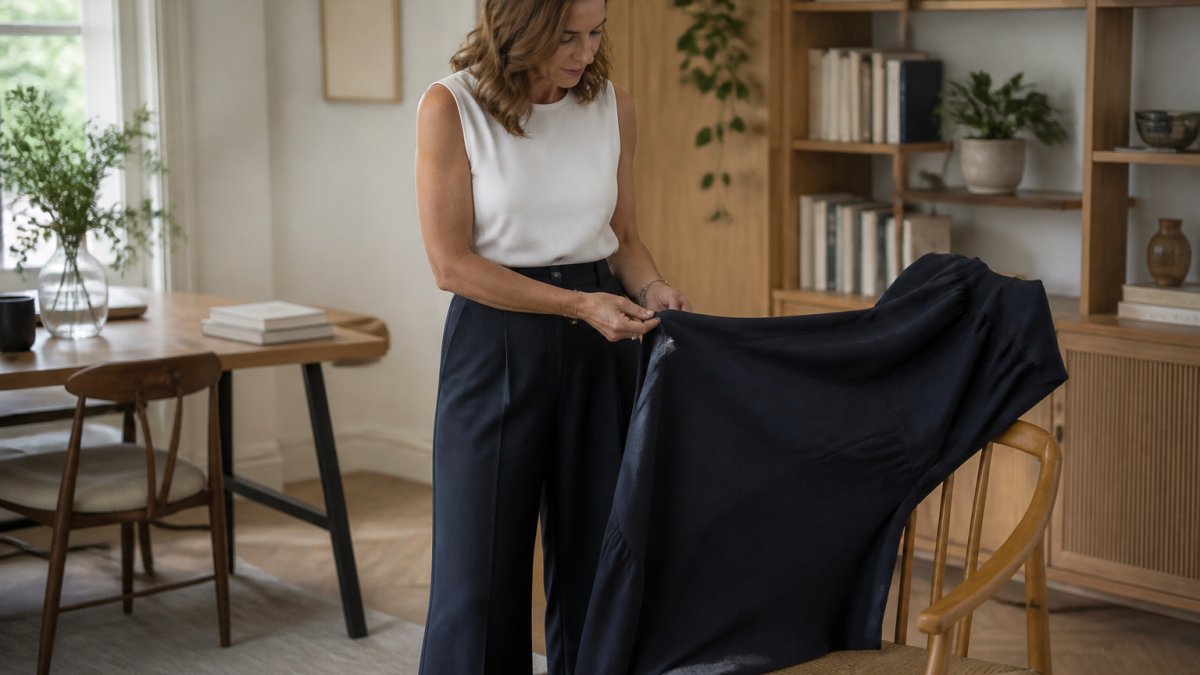
Our Contrast Panel Midi Dress is made in London from recycled crease-resistant fabric, which means it packs flat, hangs out, and needs no tumble drying. Our Vintage Feel Ponte Dress with Cuffs works as both office and occasion wear, shaped from knitted fabric that holds its form. Both are the kind of piece you reach for weekly rather than once a season.

Occasion wear is the harder case. A wedding guest dress worn once has a terrible cost per wear no matter what you paid. The fix is choosing pieces that cross over: a dress that works for a formal event and for a work day pays for itself twice as fast.
The Drawbacks of Premium Sustainable Fashion (and When Fast Fashion Wins)
Premium sustainable fashion has real drawbacks, and pretending otherwise does not help anyone. The upfront cost is higher. The ranges are smaller, so your size may sell out. And "sustainable" is not a regulated term, which means some brands use it loosely.
Fast fashion wins in specific situations:
- You need something for a single event and will not wear it again
- Your size or shape is changing and the garment is temporary
- You are testing a new style and are not yet sure you will commit to it
- Your budget genuinely cannot stretch this month
There is also a practical limit to how much any single purchase can fix. One well-chosen dress does not offset a wardrobe of unused clothes. The gain comes from buying less overall, not from buying expensive once.
Verdict: Who Should Buy Premium Sustainable Fashion
Premium sustainable fashion is worth it for anyone who wears the same pieces repeatedly and wants to stop replacing them. It is not worth it for one-off purchases or impulse buys.
Buy premium if you fit any of these:
- You wear workwear four or more days a week
- You want a small wardrobe that mixes and matches
- You care about where your clothes are made and can verify it
- You have been burned by cheap pieces losing shape
Skip it if you need a single outfit for one event, or if your size is in flux.
At HotSquash, every piece is designed and made in London, uses premium fabrics, and is built to be worn again and again. We offer free UK delivery and free UK returns, so you can test the fit without risk. Start Shopping and build a wardrobe that earns its place.
Frequently Asked Questions
Is premium sustainable fashion worth the higher price?
It depends on how many times you wear the piece. A dress that costs £80 and is worn 40 times works out at £2 per wear; a £15 dress worn three times costs £5 per wear. Sustainable fashion is worth it when the garment suits your life, fits well and gets worn regularly. If you only need something for a single event, renting or borrowing may be the better call.
Why does sustainable clothing often cost more than fast fashion?
The price reflects how the garment was made. Producing in London means paying UK wages, meeting UK employment standards and keeping supply chains short, all of which cost more than offshore mass production. Premium fabrics and smaller production runs also push costs up. Fast fashion keeps prices low through volume, speed and lower labour costs, and those savings come from somewhere.
How do you calculate cost per wear?
Divide the purchase price by the number of times you expect to wear it. A £9.99 pair of wide leg trousers worn twice a month for two years works out at roughly 21p per wear. Before buying, be honest about how often the piece fits your week. If a garment only suits one occasion, its cost per wear will stay high no matter how well it is made.
How can you tell whether a fashion brand is genuinely sustainable?
Look for specifics rather than slogans. A credible brand states where the garment was made, names the fabric and its composition, and explains what happens at the end of the garment's life. Vague claims like 'eco-friendly' with no detail are a warning sign. If a brand cannot tell you where a piece was produced, treat the sustainability claim with caution.
The real challenge is not finding sustainable clothing. It is finding pieces you will actually wear often enough to justify them. HotSquash designs luxury womenswear in London with premium fabrics and a low carbon footprint, backed by free UK delivery and free UK returns. Get started with HotSquash and build a wardrobe where every piece pulls its weight.