



Eco Friendly Evening Wear: A 2026 Buying Guide
Table of Contents
- What Makes Evening Wear Eco Friendly?
- Sustainable Evening Dresses: What to Look For
- Sustainable Wedding Guest Outfits That Work for Multiple Events
- Sustainable Cocktail Dresses: Balancing Style and Ethics
- How to Evaluate Sustainable Occasion Wear Brands
- Caring for Eco Friendly Evening Wear So It Lasts
- Frequently Asked Questions
Last Updated: 5 October 2026
What Makes Evening Wear Eco Friendly?
Eco friendly evening wear is clothing designed for formal occasions that reduces environmental impact across its full life cycle, from fibre choice and dyeing through to manufacture, transport and eventual disposal. At HotSquash, we design and produce our dresses in London precisely because those stages are where most of an outfit's carbon footprint is decided. This guide explains what to look for, which fabrics earn their claims, and how to judge whether a brand's sustainability story holds up. Prioritising low-impact production methods begins with a rigorous assessment of eco friendly dress fabrics, which serve as the foundational element for any garment intended to endure beyond a single season.
Three things separate genuinely low-impact occasion wear from marketing:
- Fibre content. Recycled and lower-impact materials beat virgin synthetics and conventional cotton.
- Where it is made. Shorter supply chains cut air freight and make working conditions easier to verify.
- How long it lasts. A dress worn twenty times has a fraction of the impact per wear of one worn twice.
The last point is the one most shoppers overlook. Durability is a sustainability feature.
Fabric Choices That Reduce Impact
Recycled polyester is the workhorse of lower-impact evening wear. It reuses existing plastic rather than drawing new oil, and it holds pleats and drape well, which matters for occasion pieces. The trade-off is microfibre shedding in the wash, so wash less often and use a guppy bag.
Other options worth knowing:
- Recycled polyester: durable, crease-resistant, takes dye well.
- TENCEL™ lyocell: wood-pulp based, closed-loop processing, soft drape.
- Organic linen: low water use, but creases heavily.
- Deadstock fabric: surplus cloth diverted from landfill, though supply is unpredictable.
Production and Transport: Why Local Matters
Making clothes close to where they are sold removes the largest single transport cost in most garments' lives. Air freight is far more emissions-intensive than sea freight, and fast fashion relies on it to hit short lead times.
Local production also makes supply chains easier to audit. When a dress is cut and sewn in the same city it ships from, there are fewer intermediaries between the brand and the people making it. That transparency is difficult to fake and straightforward to verify.
The Waste and Resources Action Programme textiles guidance sets out how garment lifetimes and supply chain choices affect overall environmental impact.
Sustainable Evening Dresses: What to Look For
The best sustainable evening dresses combine a lower-impact fibre, a cut that flatters without constant alteration, and a construction that survives repeated wear. Look at the seams, the lining and the fastenings before you look at the label.
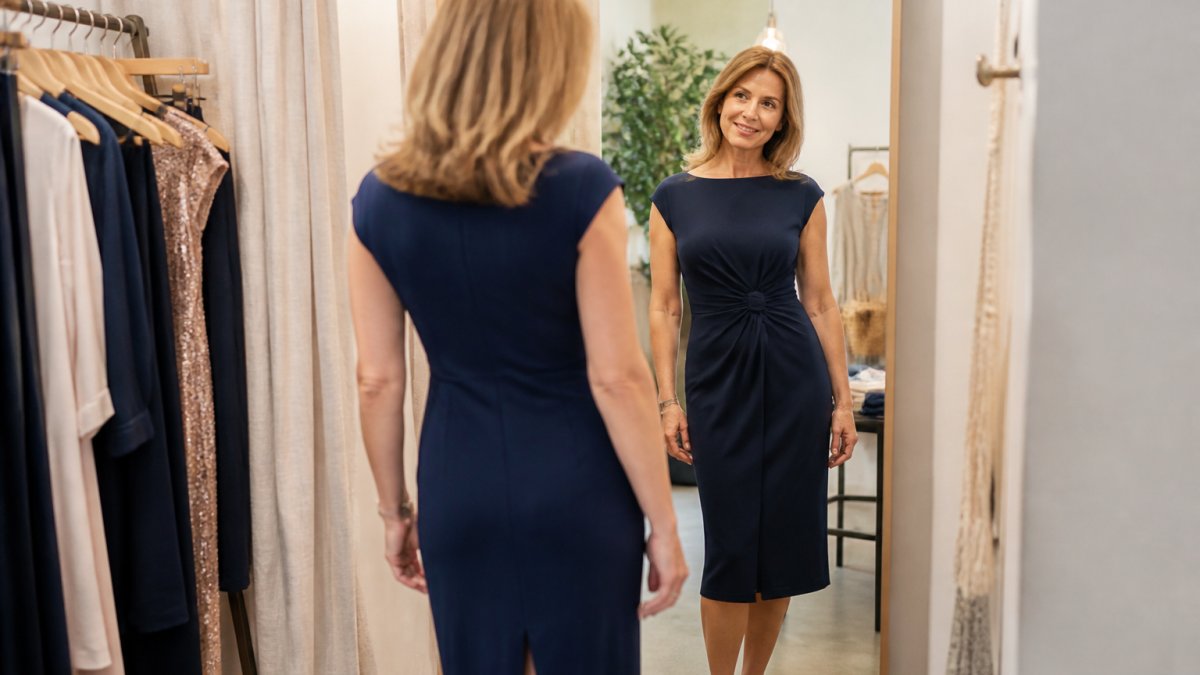
A practical checklist for the fitting room:
- Fabric is recycled, organic or certified lower-impact
- Seams are finished, not raw or overlocked loosely
- Lining is attached properly and does not twist
- Zip runs smoothly and sits flat
- Care label allows a cool machine wash
- The dress works for at least two different events
That last item is the quiet sustainability win. A dress that covers a wedding, a work dinner and a party replaces three purchases.
Our Contrast Panel Midi Dress is a good example of the approach: made in London from recycled crease-resistant fabric, machine washable at 30°C, and cut to a 130cm centre back length that suits formal settings. It is priced at £29.99.

Sustainable Wedding Guest Outfits That Work for Multiple Events
Sustainable wedding guest outfits should be chosen for versatility first. A dress that only suits one wedding dress code will be worn once, and single-wear garments undermine every other sustainable choice you make.
Think about the calendar rather than the single occasion. A midi dress in a solid or subtly patterned fabric can be restyled with different shoes, jackets and accessories to cover a spring wedding, a summer garden party and an autumn reception.
Colour is the biggest constraint. Very pale shades and heavily embellished fabrics read as bridal and rarely work twice. Deep tones, prints and structured midi cuts are far more flexible.
Sustainable Cocktail Dresses: Balancing Style and Ethics
Sustainable cocktail dresses have to work harder than most pieces, because cocktail dress codes are less forgiving and the temptation to buy something disposable is stronger. The fix is to prioritise fabric quality over novelty.
A crease-resistant recycled fabric holds its shape through an evening and still looks sharp at the end of it. That matters if you are travelling to the event or going straight from work. Lower-maintenance fabrics also mean less dry cleaning, which is one of the least visible environmental costs of formal wear.
Look for:
- A silhouette you already know suits you, rather than a trend-led cut
- Fabric with enough weight to hang properly
- Detachable or minimal embellishment that will not date
- A length you can wear again without alteration
UK government guidance on textile waste and the circular economy explains why extending a garment's active life is one of the most effective single actions a shopper can take.
How to Evaluate Sustainable Occasion Wear Brands
Judging sustainable occasion wear brands comes down to evidence, not adjectives. Any brand can call itself ethical; far fewer can tell you where the fabric came from and who made the garment.
Ask these questions before you buy:
| What to check | Weak answer | Strong answer |
|---|---|---|
| Fibre sourcing | "Eco-friendly materials" | Named fibre, e.g. recycled polyester |
| Manufacturing location | "Ethically made" | Specific city or region disclosed |
| Care instructions | Dry clean only | Cool machine wash, low iron |
| Returns policy | Paid return shipping | Free returns within a set window |
| Longevity signals | Trend-led, seasonal drops | Timeless cuts, restocked styles |
A brand that answers four or five of these clearly is usually worth your money. One that answers none is not.
Caring for Eco Friendly Evening Wear So It Lasts
Caring for eco friendly evening wear properly can double its useful life, and that is the single biggest environmental gain available to you after purchase. Most occasion wear is damaged by cleaning, not by wearing.
Practical habits that make a difference:
- Wash at 30°C or lower, and only when genuinely needed
- Air garments between wears instead of washing them
- Use a mesh bag for recycled synthetics to catch microfibres
- Iron on low, or hang in a steamy bathroom to release creases
- Store on a padded hanger to protect the shoulders
- Repair loose seams and buttons early
Recycled polyester blends dry quickly, so tumble drying is usually unnecessary. Skipping it protects the fabric and cuts energy use at the same time.
Frequently Asked Questions
What is eco friendly evening wear?
Eco friendly evening wear describes formal dresses, jumpsuits and separates made with reduced environmental impact. That can mean recycled fabrics, low-carbon production methods, or locally made garments that travel shorter distances. It also covers how long a piece lasts: a dress you wear for years has a far smaller footprint than one worn once. Look for transparent material sourcing, British manufacturing where possible, and care instructions that keep the garment in good condition.
Where can I buy sustainable evening dresses?
Look for brands that publish where and how their clothes are made. HotSquash designs and produces in London using recycled crease-resistant fabric, with free UK delivery and returns. The Contrast Panel Midi Dress (£29.99) is a good example: made from recycled polyester, machine washable at 30°C, and designed to need minimal ironing. Always check the product listing for material details and care guidance before buying.
What fabrics are best for sustainable occasion wear?
Recycled polyester is a practical choice for evening wear because it resists creasing, dries quickly and holds its shape. It also diverts plastic waste from landfill. Other options include Tencel, deadstock fabric and certified organic silk. The best fabric depends on the occasion: structured dresses need fabrics that hold shape, while flowing styles suit lighter weaves. Whatever you choose, check the care label. Fabrics that wash at low temperatures and need little ironing reduce energy use over the garment's life.
How do I care for an evening dress so it lasts longer?
Wash at 30°C or lower and avoid tumble drying, which breaks down fibres and uses significant energy. HotSquash garments, for example, are machine washable at 30°C and dry quickly without a dryer. Iron on a low setting only if needed. Store dresses on padded hangers to keep shoulders in shape, and treat stains promptly. Rotating your evening wear rather than wearing the same piece repeatedly also reduces wear on any single garment.
Choosing evening wear that is genuinely lower impact means looking past the label and asking harder questions about fibre, factory and lifespan. HotSquash designs and produces luxury womenswear in London, using premium recycled fabrics and crease-resistant finishes that hold up to real wear. Every order includes free UK delivery and free UK returns, so you can judge the fit and the quality for yourself. Start shopping with HotSquash and build an occasion wardrobe that earns its place.