



How to Build a Sustainable Work Wardrobe, Step by Step
Quick Summary
To build a sustainable work wardrobe, first audit what you already own by sorting every work-appropriate piece into wear now, repair, alter or let go. Then identify your dress code, fill the one gap causing most frustration, and choose durable fabrics with solid construction.
- Sort every work-appropriate piece into wear now, needs repair, needs altering or let go.
- Map your capsule to your real dress code, not one you imagine your job requires.
- Choose two or three colours that all combine, so fewer pieces make many outfits.
- Pick fabrics for durability and care, such as wool for jackets and cotton for shirts.
- Divide each price by expected wears to judge whether a piece is worth buying.
Table of Contents
- Auditing the Work Wardrobe You Already Own
- Mapping Your Dress Code and Building a Workwear Capsule
- Choosing Sustainable Fabrics and Checking Construction
- Reading Labels and Vetting Ethical Clothing Brands
- Setting a Budget with Cost Per Wear
- Caring for Workwear So It Lasts
- Your Next Step: Starting Your Work Wardrobe Plan This Week
- Frequently Asked Questions
Auditing the Work Wardrobe You Already Own
The first step in building a sustainable work wardrobe is finding out what you have, what you actually reach for, and what is quietly taking up space.
Take each item and sort it into one of four piles: wear now, needs repair, needs altering, or let go. Be honest. A blazer that pinches at the shoulders is not a bargain just because it cost £20.
- Wear now: fits well, suits your role, and you feel good in it
- Needs repair: a missing button or small tear you can fix
- Needs altering: good quality but the hem, waist or sleeves are wrong
- Let go: worn out, never worn, or wrong for your job
Next, look for gaps. Which outfits do you rebuild every week? Which days do you stand in front of the wardrobe with nothing to wear? Those gaps show you where a new piece would earn its place.
Watch out: do not buy to fill every gap at once. Choose the one gap that causes the most daily frustration and solve that first.
Mapping Your Dress Code and Building a Workwear Capsule
Your workplace sets the rules, so start there. Write down what your office actually expects, not what you think it expects. A law firm, a school and a creative agency all have different norms, and your capsule should match them. The most common mistake is to build a capsule for an imagined job rather than the one you actually do.
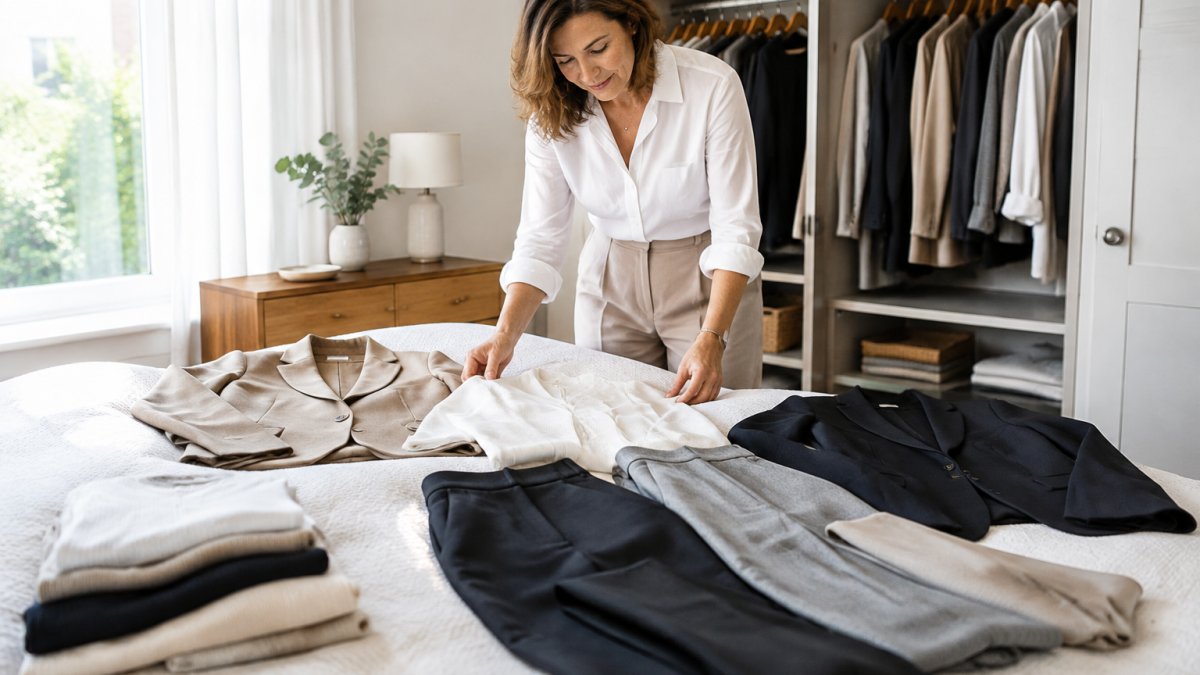
Match the capsule to your dress code
Use the descriptions below to identify which pattern fits your week, then adjust the quantities to your own laundry cycle and commute. If you need professional clothes that fit you properly, getting the fit right first means the pieces you choose will work hard all week.
- Formal (suits, client-facing, court or boardroom): 2 suits or tailored separates in navy or charcoal, 4 shirts or blouses, 1 spare jacket, 1 pair of polished shoes, 1 overcoat. Keep a spare pair of tights or socks at your desk.
- Business casual (smart trousers, knitwear, no tie): 3 pairs of trousers or skirts, 4 tops, 1 blazer, 1 knit layer, 1 pair of smart trainers or loafers. This is a common pattern in many offices and is easy to over-buy.
- Hybrid (two or three days on site): 2 bottoms, 3 tops, 1 blazer, 1 dress or jumpsuit, 1 outer layer. Keep a small "site kit", a jacket, a pair of shoes and a spare top, so you are not buying a second wardrobe for office days.
- Uniformed or PPE roles: focus on the layers you control, base layers, socks, shoes and a warm mid-layer, and check whether your employer provides or launders items. Do not duplicate kit your employer supplies.
Build a small, combinable palette
Pick two or three colours that all work together, such as navy, cream and charcoal, or black, grey and a single accent. When every piece goes with every other piece, you need fewer items to create many outfits. Count the outfits you can make: ten pieces that combine well can often produce more than twenty outfits, which is the real measure of a good capsule.
A sample week of repeatable outfits
A ten-piece capsule can cover a full working week without repeating a whole outfit. One workable example:
- Monday (meetings): tailored trousers, a fine-knit top and a blazer.
- Tuesday (desk day): the same trousers with a shirt and no jacket.
- Wednesday (hybrid): the dress or jumpsuit with the blazer and flat shoes.
- Thursday (client lunch): the skirt or second pair of trousers with the fine-knit top and blazer.
- Friday (casual): the shirt with the second pair of trousers and smart trainers.
Swap the blazer for a knit layer on colder days and the flat shoes for loafers on wet ones. The point is not the exact pieces but the principle: each item should appear in at least three outfits across the week.
Watch out: do not buy to fill every gap at once. Choose the one gap that causes the most daily frustration, usually shoes, a warm layer or a smart top, and solve that first.
Choosing Sustainable Fabrics and Checking Construction
Fabric matters because it decides how long a garment lasts and how it behaves through a working week. No fibre is automatically sustainable: durability, care, sourcing and end-of-life all matter, and the right choice depends on how you will wear the piece.
Compare common workwear fabrics on their trade-offs
- Wool (including merino): breathable, odour-resistant and crease-recovering, so it can be worn several times between washes. It is often more expensive and needs careful washing or dry cleaning.
- Cotton: comfortable and easy to wash, but it creases and can wear at cuffs and collars. A denser weave and a small amount of elastane can improve recovery; check that the elastane content is low enough that the garment does not lose shape.
- Recycled polyester: durable, crease-resistant and quick-drying, which suits commuting and travel. It can pill and hold odour, so look for a brushed or textured finish and wash it less often.
- Viscose and lyocell: drape well and feel cool, but they can shrink or distort when wet. Check the care label and avoid high heat.
- Linen: cool and hard-wearing but creases heavily, which suits some creative and casual workplaces more than formal ones.
A common pattern is to choose wool or a wool blend for jackets and trousers, cotton or a cotton blend for shirts, and recycled polyester for outer layers and commute-friendly pieces. Match the fabric to the number of wears you expect and the care you are realistically willing to do.
Check construction before you check the price
Look for:
- Seams that lie flat and have no loose threads, with a seam allowance wide enough to let out
- Lining that is secured properly, not puckering, and has a pleat at the back for movement
- Buttons stitched firmly, with a thread shank, and a spare button supplied
- Fabric weight that feels substantial, not thin or see-through under light
- Pockets that are reinforced at the corners and not just stitched on
- A hem with enough turn-up to be altered
Quality construction is what lets a piece survive many wears and washes. A well-made jacket in a sensible fabric will usually outlast a cheap one several times over, and it can be altered rather than replaced.
Watch out: a high price is not proof of quality. Check the seams, lining and fibre content yourself, and be sceptical of a premium price on a thin fabric.
The article compares common workwear fabrics and what to check in construction, so the main trade-offs can be scanned at a glance. For a deeper guide on picking the right materials, read how to choose sustainable fabrics for your wardrobe.
| Fabric | Main strength | Main drawback |
|---|---|---|
| Wool (including merino) | Breathable, odour-resistant, crease-recovering | Often pricier; needs careful washing |
| Cotton | Comfortable and easy to wash | Creases; can wear at cuffs and collars |
| Recycled polyester | Durable, crease-resistant, quick-drying | Can pill and hold odour |
| Viscose and lyocell | Drapes well and feels cool | Can shrink or distort when wet |
| Linen | Cool and hard-wearing | Creases heavily |
Reading Labels and Vetting Ethical Clothing Brands
The care label and fibre content tell you a lot. Look for clear fibre percentages, such as 100% wool or 95% recycled polyester, rather than vague wording. Care instructions also matter: a piece that needs dry cleaning every time costs more to keep than one you can wash at home.
When you research a brand, check whether it:
- States where its clothing is made
- Publishes information about its materials and suppliers
- Explains how it handles returns, repairs or end-of-life garments
- Uses specific claims that you can verify, rather than broad words like "eco" or "green"
Be wary of claims that cannot be checked. For the broader picture, our ethical clothing guide to sustainable fashion covers how to vet brands on the same questions. For official guidance on green claims, the Competition and Markets Authority guidance on environmental claims sets out what businesses must be able to back up.
Setting a Budget with Cost Per Wear
Cost per wear is the simplest way to judge whether a piece is worth its price. Divide the price by the number of times you expect to wear it. A £120 jacket worn 60 times costs £2 per wear.
Use this to prioritise. Spend more on pieces you wear every week, such as your core blazer or trousers, and less on occasional items. Track your wear for a month to see which pieces earn their keep.
Watch out: an estimate of how often you will wear something is only useful if you are honest. Wishful thinking is the most common reason people end up with expensive items that hang unused.
Caring for Workwear So It Lasts
Good care can double the life of a work wardrobe. Follow the label, wash less often where you can, and air garments between wears. If you own sustainable jersey pieces, specific washing steps for sustainable jersey fabric show exactly how to keep them looking new. Turn knitwear and dark trousers inside out, and wash on a gentle cycle at the lowest suitable temperature.
Some simple habits help a lot:
- Hang jackets on wide, shaped hangers to keep shoulders from sagging
- Use a fabric shaver for pilling on knitwear
- Mend small problems quickly, before they grow
- Store out-of-season pieces clean and dry, away from direct sunlight
Learning a few basic repairs, such as sewing on a button or closing a small hem, keeps good pieces in use for years. For general washing and care guidance, the Textile care labelling guidance from the Textile Services Association explains what the symbols on a label mean.
Your Next Step: Starting Your Work Wardrobe Plan This Week
Pick one task from this guide and finish it this week. Audit one rail, write down your dress code or map one outfit combination. Small, finished steps build a sustainable work wardrobe far faster than a large clear-out.
HotSquash designs and makes its womenswear in London. Our Grecian Neck Top is a good starting point for layering, and you can explore our capsule wardrobe collection to plan your next purchase. Start shopping when you are ready to build your plan.
BUTTON: Shop the Workwear Edit
Frequently Asked Questions
How do I start building a sustainable work wardrobe?
Begin with a wardrobe audit. Take everything out, sort it into keep, repair and let go piles, and note which workplace outfits you actually wear each week. Then list the gaps, such as a missing smart jacket or a reliable pair of trousers, and fill only those gaps. Buying against a written list stops impulse purchases and keeps the wardrobe small and useful. Keep the list for six months and review it before any new purchase.
What should be in a sustainable work capsule wardrobe?
A workable capsule usually includes two or three trousers or skirts, a blazer, four to six tops, one dress that works for the office and a smart evening option, plus a knitted layer. Pick colours that all work together, so most pieces combine with one another. Build outfits around your dress code rather than trends. Aim for around 20 to 25 items you can mix into at least 30 outfits, which gives a practical range without overstocking.
How can I tell whether work clothes are ethically made?
Check the label for the country of manufacture and whether the brand names its factories or workshops. Look for information on working conditions and wages, and for third-party certification where it applies. Brands that design and make clothes close to home, such as HotSquash, which designs and produces its womenswear in London, let you check production more directly. Be cautious of vague claims like eco-friendly without any supporting detail.
How can I build a sustainable work wardrobe on a budget?
Prioritise the pieces you wear most, such as a well-cut blazer or trousers, and buy those first. Spread larger purchases over several months rather than refreshing everything at once. Second-hand and clothing swaps can fill basics at lower cost.
